A business posts to social every day. The follower count looks respectable, the posts get likes, the occasional one does numbers. And when the owner asks the sales team how many deals came from social this quarter, the answer is a shrug. This is the most common social media complaint we hear, and it is almost never a posting problem. It is a strategy problem. The account is being run as a popularity contest when it should be run as a growth channel.
Good social media marketing is not measured in followers and likes. It is measured in brand, demand, and revenue. Here is how to close the gap between a busy feed and an actual business result.
Why followers and likes are the wrong scoreboard
Vanity metrics feel like progress and rarely are. A big following that never buys, and likes from people who will never be customers, tell you almost nothing about whether social is working for the business. Worse, chasing them pushes you toward the content that gets cheap engagement instead of the content that moves buyers.
A few hard truths about the numbers most accounts track:
- Followers are not customers. A large audience of the wrong people is a cost, not an asset.
- Organic reach keeps shrinking. Platforms want you to pay, so a given post reaches a small fraction of your followers anyway.
- Likes do not pay invoices. The only engagement that matters is the kind that moves someone toward becoming a customer.
The fix starts with changing what you measure, because the goal you chase is the result you get.
What Social Media Marketing Actually Does for a Business Now
Here is the mindset shift that changes everything: social rarely closes the sale directly, and that is fine, because that is not its job. Its job is to build the brand, demand, and trust that convert everywhere else.
- It builds brand familiarity, so when someone is ready to buy, you are the name they already recognize and trust.
- It creates demand that later shows up as branded search and direct enquiries, which look like they came from nowhere.
- It feeds the brand signals that search engines and AI assistants read when deciding who to surface and recommend, which connects directly to your visibility in AI search and to turning social content into search demand.
Picture the path a real sale takes. Someone scrolls past your short video in February, follows on a whim, watches a few more over the next two months, and never clicks a single link. In April they have a problem you solve, search your brand name directly, and buy. Your analytics credit that sale to branded search or to direct traffic, and your social report, if it only counts likes, shows nothing at all. Social did the work. The measurement simply missed the connection, which is exactly why so many businesses conclude that social does not sell when it has been selling the whole time.
Once you accept that social is a brand and demand engine rather than a direct sales channel, you stop judging it by the wrong numbers and start building it to actually work.
Build a funnel, not just a feed
A feed broadcasts. A funnel moves people. The accounts that drive revenue treat social as the top of a journey, not the whole thing:
- Attract the right people with content that speaks to your actual buyers, not the widest possible audience.
- Engage so the platform shows you to more of those people, and so they start to trust you.
- Capture the audience you do not own into one you do, an email list, a community, a lead form, because you control that and the algorithm cannot take it away.
- Convert with clear calls to action and offers, on social and in the channels social feeds.
The single biggest miss we see is step three: brands build an audience they are only renting from the platform and never turn it into one they own. Capturing that audience is where social starts paying off.
Also Read :- the real significance of digital marketing
What actually works on social in 2026
The tactics that earn attention and trust have shifted, and the businesses still broadcasting polished corporate posts are the ones wondering why nothing lands. What works now:
- Short-form video is the dominant format on nearly every platform, and it is where organic reach still exists.
- Consistency beats intensity. A steady cadence you can sustain outperforms a burst that burns out.
- Native content per platform. What works on LinkedIn is not what works on Instagram or TikTok, so repurpose with intent rather than cross-posting the same asset everywhere. One idea reshaped for each platform's format and audience always beats a single post blasted across all of them.
- Founder and employee-led content outperforms the faceless brand account, because people trust people.
- Community over broadcasting. Replying, conversing, and showing up in other people's comments builds more than any amount of posting into the void.
- Genuine social proof. Customer stories and reviews shared socially do double duty as trust signals, which we cover in using reviews to boost trust and SEO.
Measure what the business cares about
If your social report leads with follower growth and likes, it is measuring the wrong things. Report on what the business actually cares about:
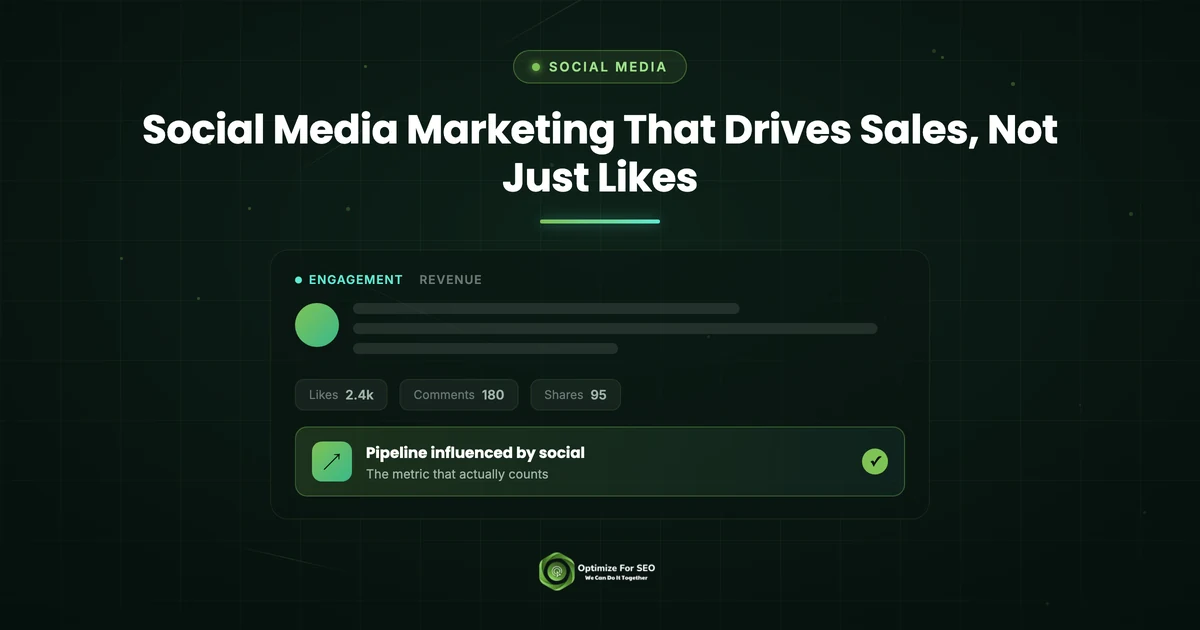
- Pipeline and revenue influenced by social, including assisted conversions where social touched the journey.
- Branded search lift over time, a strong sign that social is building demand.
- Audience you own (email, community) growing, not just platform followers.
- Quality of engagement, comments and shares from real prospects, over raw like counts.
Measured this way, social stops looking like a cost with no return and starts showing its real contribution, most of which was always happening in channels your old report never connected to it.
If your social is busy but not driving business, that is a strategy and funnel problem we fix every day. It is the core of our social media marketing services, and a free audit will show you where your social effort is leaking instead of converting.
Frequently Asked Questions
Why does my social media get likes but no sales?
Usually because the account is run for reach and engagement rather than as a funnel. Social rarely closes a sale directly; its job is to build brand familiarity, demand, and trust that convert in other channels. If you are not capturing the audience and guiding it toward an offer, likes never become revenue.
Are followers and likes worthless in social media marketing?
Not worthless, but they are poor goals. A large following of the wrong people and likes from non-buyers tell you little about business results. Treat them as weak leading indicators at best, and judge social media marketing on brand lift, demand, and revenue it influences instead.
What type of social content works best in 2026?
Short-form video leads on most platforms and is where organic reach still exists. Beyond format, consistency, platform-native content, founder and employee-led posts, genuine community engagement, and real social proof outperform polished faceless broadcasting. Repurpose with intent for each platform rather than cross-posting identical assets.
How does social media help my SEO and AI visibility?
Social does not pass direct ranking signals, but it builds brand familiarity and demand that show up as branded search, and it strengthens the brand and entity signals search engines and AI assistants read when deciding who to surface and recommend. Strong, consistent social presence supports the visibility you earn in search and AI answers.
How should I measure social media marketing success?
Measure pipeline and revenue influenced by social including assisted conversions, branded search lift over time, growth of an audience you own such as email or community, and the quality of engagement from real prospects. Lead your reporting with business outcomes, not follower counts and likes.
Want this handled for you? Our social media marketing agency can help you turn social audiences into real pipeline.
Aashirvad Kumar
Writes about SEO, digital marketing and growth at Optimize For SEO.